Concrete & Palms
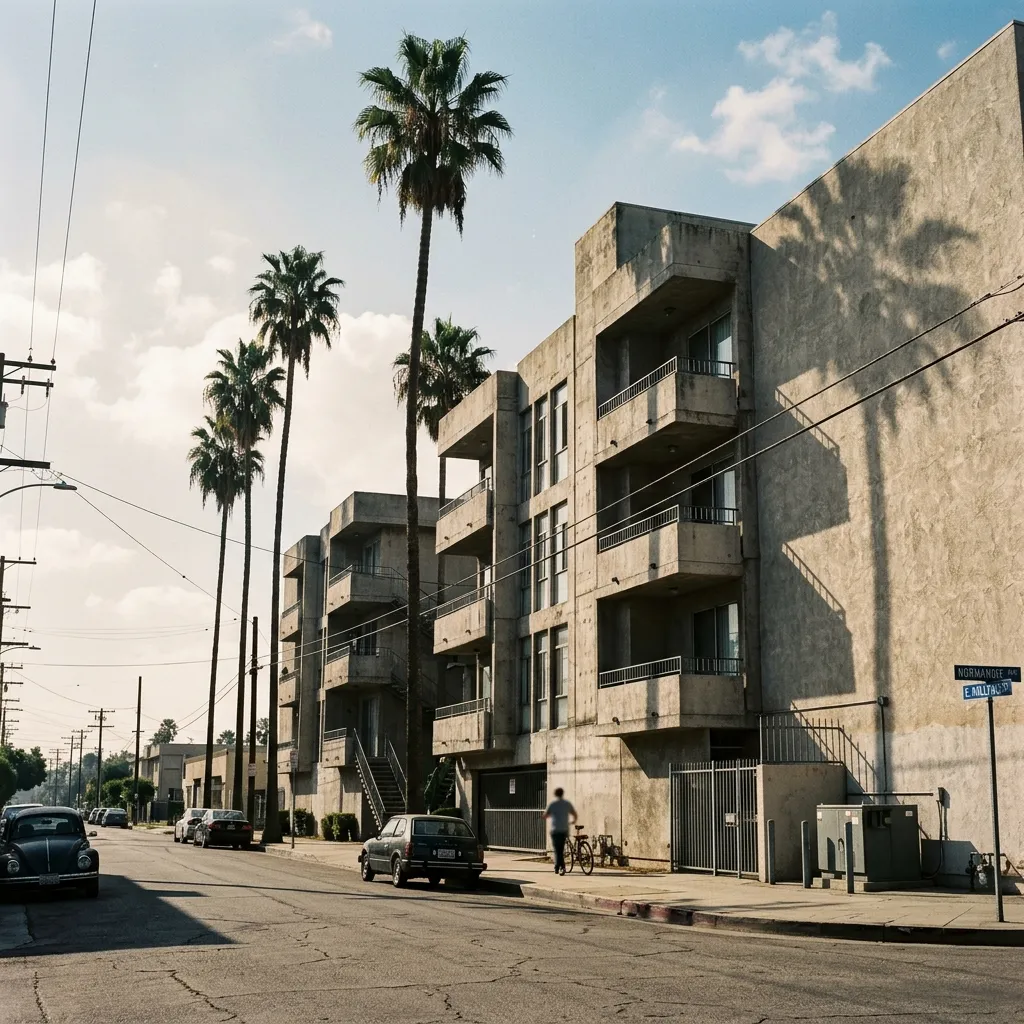
East Hollywood doesn’t photograph the way people expect Los Angeles to photograph. There are no beaches. No hills with views. No midcentury modern houses cantilevered over canyons. What there is: concrete. A lot of it. And palms.
This walk started at the corner of Normandie and Santa Monica and headed south, then east, then wherever the light and the textures pulled.
The buildings
The apartment buildings in East Hollywood are a catalog of mid-century pragmatism. Dingbats, stucco boxes, the occasional brutalist experiment. They were built fast and cheap in the ’50s and ’60s, and they’ve been weathering since. The concrete has aged into something beautiful in a way their architects never intended.
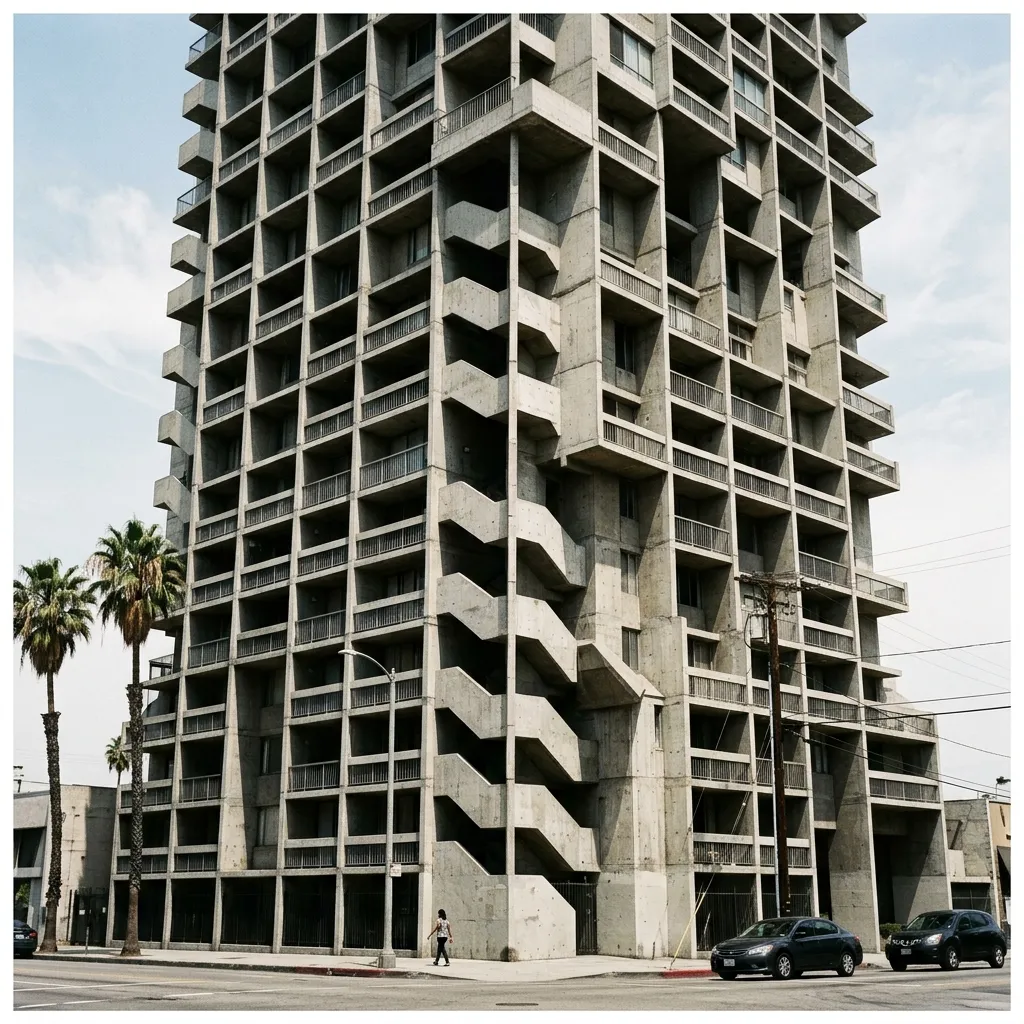
There’s a building on Normandie — you can’t miss it, it looms — that looks like it was designed to repel affection. All exposed concrete, zigzag stairwells, no ornament. But in the afternoon light, the shadows turn it into a grid of geometric poetry. Each balcony becomes a frame. Each stairwell a diagonal rhythm.
The ground
Half of good street photography is looking down.
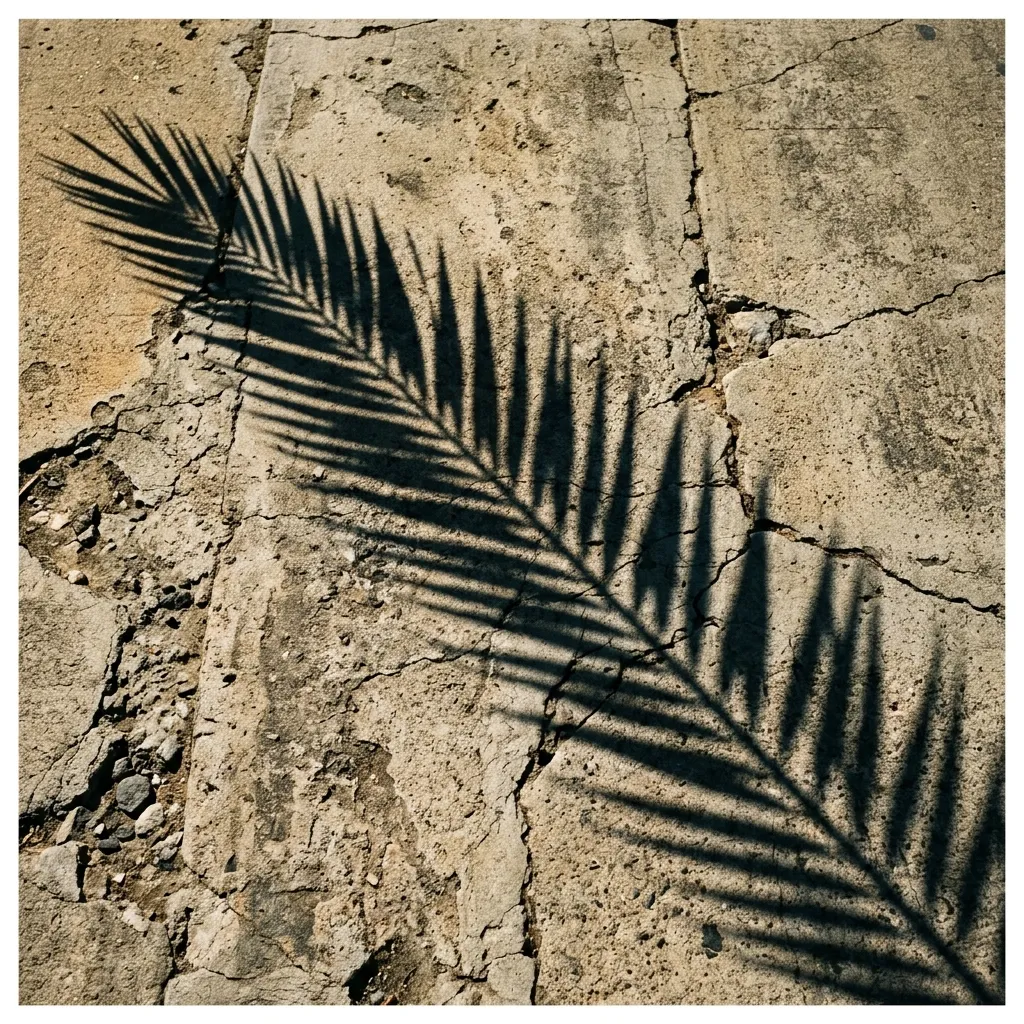
The sidewalks in East Hollywood are a record of decades of patching, cracking, and patching again. Tree roots push up through the concrete. The DWP cuts trenches and fills them with asphalt that never quite matches. And over all of it, the palms cast their frond shadows — these delicate, almost tropical patterns laid over the most utilitarian surface in the city.
The surfaces
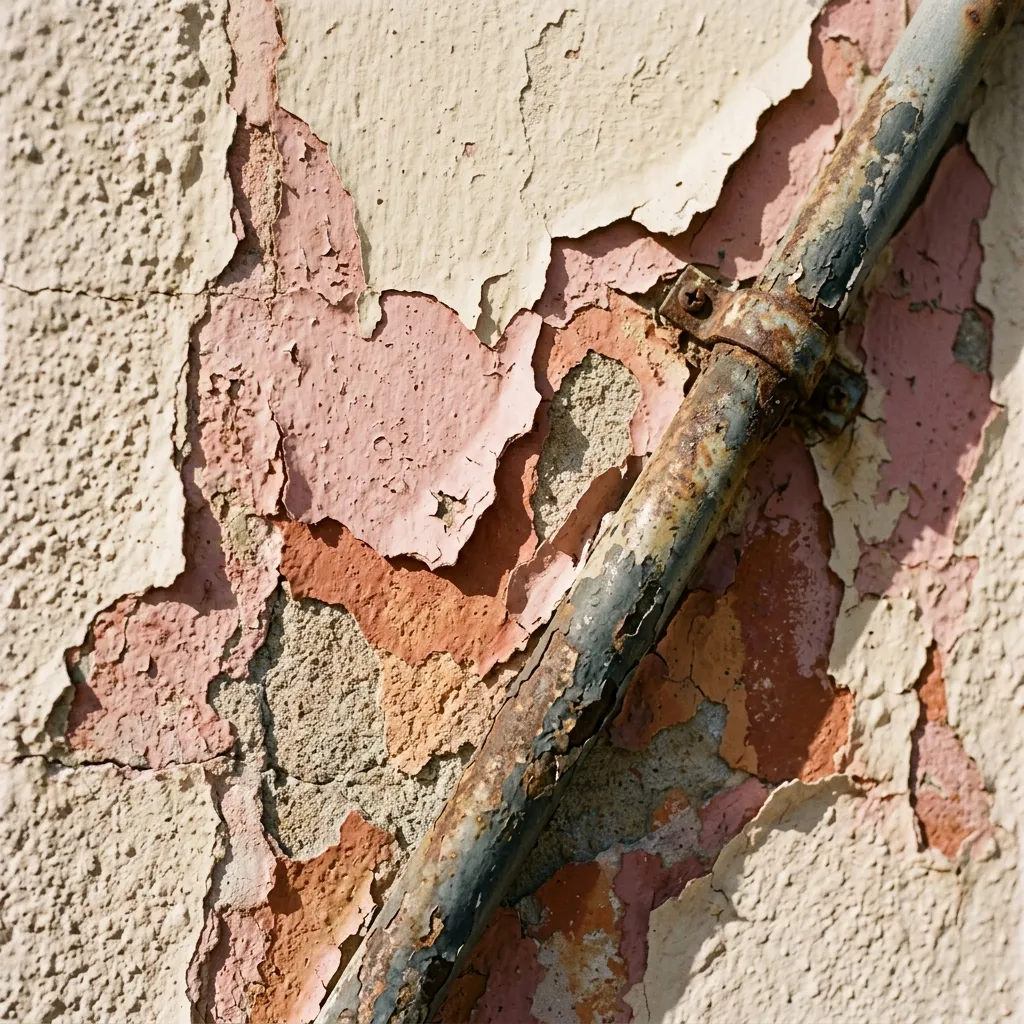
Every wall in this neighborhood is a painting if you look at it long enough. Stucco peels in layers — cream over pink over terracotta over the raw gray underneath. You can read the building’s history in its paint: each color a different landlord, a different decade, a different idea of what “freshened up” means.
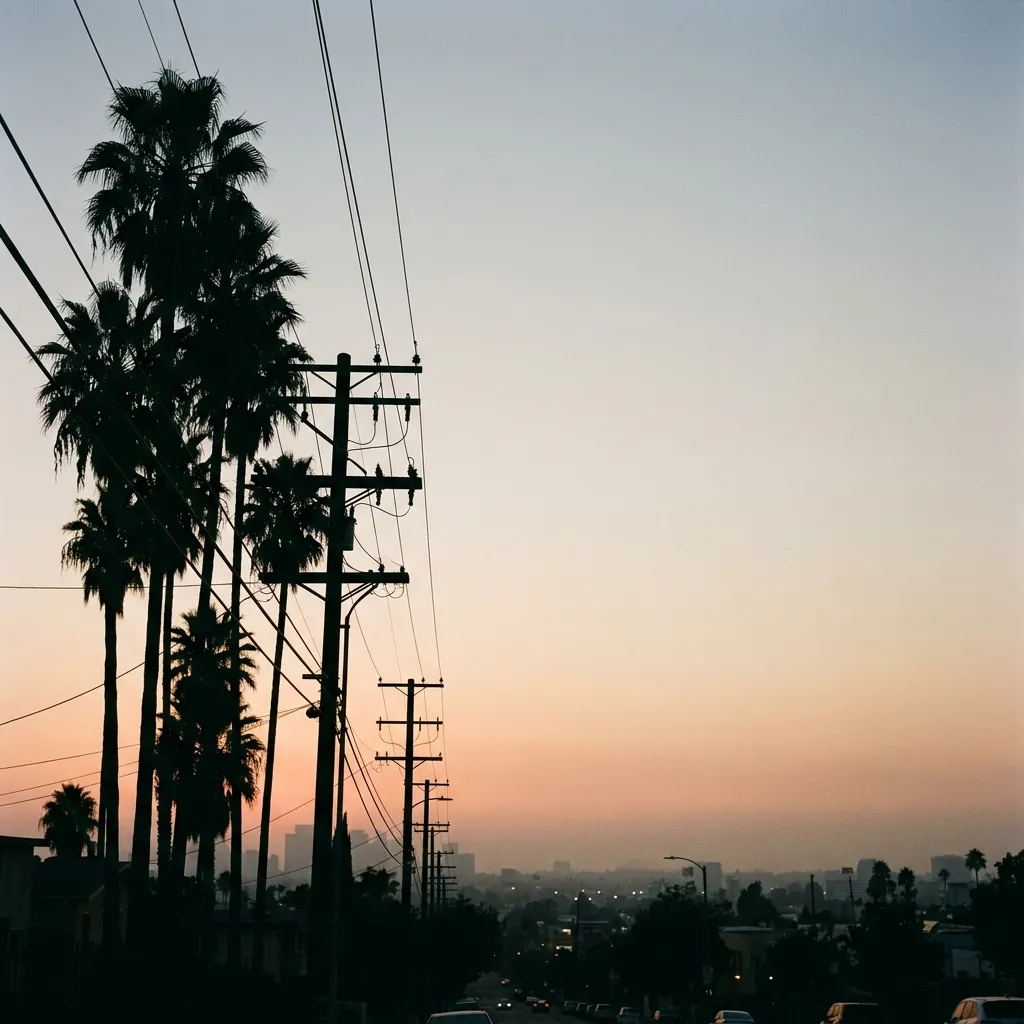
And then you look up, past the walls, past the rooflines, and there they are: the power lines and the palms, stitching the whole neighborhood together against the sky. At sunset, they go to silhouette, and East Hollywood looks like every postcard of Los Angeles that was ever printed, except grittier, and therefore more honest.
The walk
This is texture photography. Not landscapes, not portraits, not street photography in the Winogrand sense. It’s about surfaces — what happens to materials when a city sits on them for sixty years. Concrete spalls. Stucco crazes. Paint remembers its previous colors.
You walk slowly for this kind of work. A block takes twenty minutes. You’re not covering ground. You’re reading it.
East Hollywood. April 2025. Shot on Ricoh GR III.